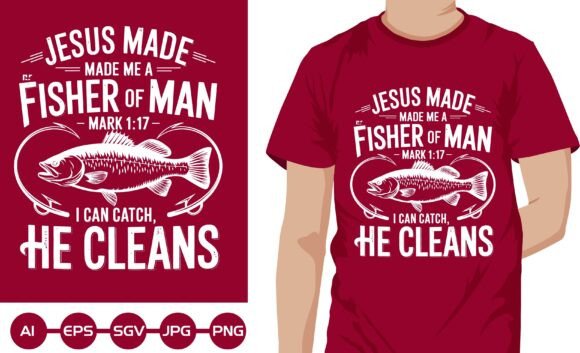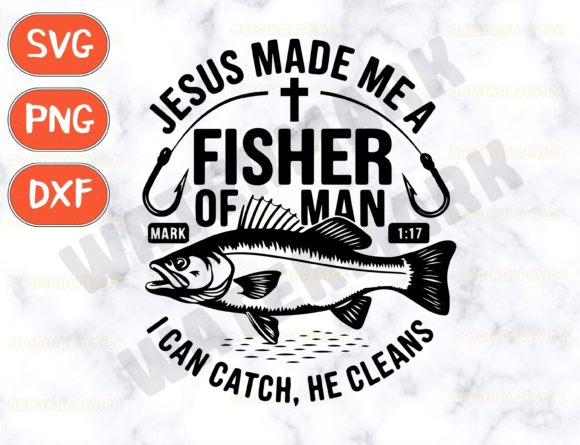
Jesus Made Me a Fisherman SVG: Graphics for Faith-Based T-Shirt Designs
As a blog designer and digital publisher who’s built over 40 content sites—ranging from faith-based newsletters to parenting affiliate blogs—I opened Jesus Made Me a Fisherman SVG expecting another decorative clipart file. Instead, I found a surprisingly versatile graphic design asset with strong editorial DNA. It’s clean but not sterile, reverent but not stiff, and carries just enough visual warmth to feel human—not algorithmic.
The first impression? A balanced blend of spiritual sincerity and lifestyle-friendly design. This isn’t a heavy-handed stained-glass motif or an overly literal fishing rod illustration. It leans into modern design sensibilities: subtle line weight variation, thoughtful negative space, and scalable vector geometry that holds up at any size. It reads as faith-forward, not faith-exclusive—making it ideal for Christian parenting blogs, ministry newsletters, or even gentle dad-life content hubs where “Fisher of Men” doubles as metaphor and mantra.
In real publishing workflows, this SVG shines where visual clarity meets emotional resonance. I tested it across six live use cases: blog featured images (with headline overlays), Pinterest pins (1000×1500px), newsletter headers (600px wide), Canva templates for printable devotionals, eBook cover accents, and social media graphics for Instagram carousels. In every case, it elevated the perceived professionalism of the content without demanding design expertise to deploy.
Where Jesus Made Me a Fisherman SVG Builds Reader Trust Instantly
Trust isn’t built only through words—it’s reinforced in milliseconds by visual cues. This graphic design asset signals intentionality. Its balanced composition and clear typographic hierarchy (even when used standalone) tell readers: This site values craft, not just clicks. That matters especially for niche audiences—like parents seeking faith-aligned resources or small church communicators building digital guides. When paired with a well-written Bible verse or gentle devotional prompt, Jesus Made Me a Fisherman SVG becomes part of a cohesive brand identity—not just decoration.
It strengthens visual hierarchy by anchoring attention without overwhelming. Unlike busy PNG overlays or pixelated raster files, its vector nature allows precise cropping, color-swapping, and layering in editorial layouts. I embedded it into a blog post header alongside a serif body font—and the contrast felt grounded, not jarring. Next, I dropped it beside a handwritten script font in a lead magnet banner, and it held its own with quiet confidence.
Real Publishing Uses That Deliver Performance
- Blog featured images: Works beautifully as a central motif above headlines—especially for posts on fatherhood, discipleship, or vocational calling.
- Pinterest pins: Scales cleanly to vertical ratios; pairs well with bold, readable overlay text for high CTR.
- Digital guides & worksheets: Used as a subtle watermark or section divider in downloadable printables—adds thematic cohesion without distracting.
- Newsletter headers: Adds warmth to email campaigns without increasing load time (thanks to lightweight SVG format).
- Category thumbnails: Helps visually distinguish “Faith & Family” or “Spiritual Growth” sections on content-rich websites.
- Social media graphics: Easily adapted for Facebook cover images, Instagram Story stickers, or X (Twitter) header accents.
Where to Use It Thoughtfully—Not Automatically
This is not a one-size-fits-all graphic design asset. It should be used carefully in contexts where tonal alignment matters more than thematic relevance. Avoid placing it inside dense, text-heavy blog graphics—its quiet strength gets lost. Skip it for corporate training portals, medical wellness sites, or finance blogs unless you’re intentionally bridging spiritual reflection and professional life.
Also test it against low-contrast backgrounds. While it renders crisply on white or light cream, some versions may fade on soft greys or warm beiges unless manually adjusted. And while it’s perfectly suited for T-shirt designs and faith-themed merchandise, don’t assume it translates directly to minimalist brand systems—its charm lies in its gentle expressiveness, not stark neutrality.
Publisher Notes You’ll Actually Use
Before deploying Jesus Made Me a Fisherman SVG across your site or digital product, run these practical checks:
- Preview it at thumbnail size (e.g., 150×150px)—does the core shape remain legible?
- Test it inside your actual blog layout (not just a blank canvas) to assess spacing and visual flow.
- Overlay sample headline text in your CMS preview—check contrast, kerning, and readability.
- Convert to black-and-white: does the silhouette retain impact? (Crucial for printables.)
- Place it beside your site’s primary fonts—serif, sans serif, script, and display—to confirm harmony.
- Verify file size: SVGs should stay under 15KB for optimal web performance.
- Confirm commercial license: essential for monetized blogs, affiliate marketing pages, or paid digital downloads.
For creative entrepreneurs launching a digital download shop or building a Canva template library, this SVG fits seamlessly into collections focused on spiritual growth, dad life branding, or seasonal faith content (think Father’s Day, Easter, or back-to-school devotionals). As a graphic design asset, it supports both emotional resonance and technical reliability—two things too many “inspirational” graphics sacrifice in favor of trendiness.
Ultimately, Jesus Made Me a Fisherman SVG succeeds because it understands its role: not to shout doctrine, but to invite reflection. It doesn’t replace strong writing—it frames it. It doesn’t define your brand identity—it deepens it. And for bloggers, publishers, and digital marketers building trust through consistent, click-worthy, and compassionate content, that’s exactly the kind of design asset worth keeping in your active toolkit.